2026 Chinese New Year (the first day of the first lunar month) falls on February 17, 2026, and the Year of the Horse lasts until February 5, 2027.
In folk tradition, the New Year celebrations begin as early as the Laba Festival (the 12th day of the 12th lunar month) or the Little Year (the 23rd day of the 12th lunar month), and continue through to the Lantern Festival (the 15th day of the first lunar month).
Most shops, companies, and banks close from the 29th or 30th day of the 12th lunar month (in 2025) through to the 7th day of the first lunar month (in 2026).
Below is a practical, day-by-day guide to celebrating the Chinese Lunar New Year.
Little New Year (the Festival of the Kitchen God)
Lunar Date: December 23rd
Gregorian Date: Jan.30 in Northern China/Jan.31, 2026 in southern China
Traditions and Customs:
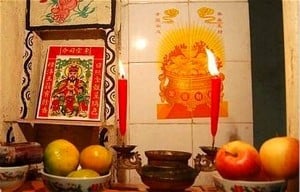
The Little New Year marks the beginning and foreshadowing of the entire Spring Festival celebration. It primarily consists of two traditional activities: sweeping dust and offering sacrifices to the Kitchen God. Since the word for "dust" (?, chén) sounds like the word for "old" (?, chén) in Chinese, people believe that cleaning helps sweep away bad luck and make room for good fortune. Every Chinese family thoroughly cleans their home—washing appliances, bed linens, curtains, and more—to welcome the New Year. According to folklore, on the 23rd day of the 12th lunar month, the Kitchen God returns to Heaven to report to the Jade Emperor on the good and evil deeds of each household. This report determines the rewards or punishments the family will receive in the coming year. For this reason, many families offer sacrifices to the Kitchen God, hoping he will speak well of them.
Laba Festival
Lunar Date: December 8th
Gregorian Date: Jan.26, 2026
Traditions and Customs:
In the traditional sense, the Laba Festival (腊八节Làbā jié) marks the beginning of the Spring Festival. Main traditions for Laba Festival are eating Laba porridge and making Laba garlic. From the day, people begin to clean the house and go shopping for preparation of the New Year.
Chinese New Year's Eve
Lunar Date: December 30th
Gregorian Date: Feb.16, 2026
Traditions and Customs:
The last day of the lunar year is known as Chinese New Year's Eve—the day immediately preceding the Spring Festival (the first day of the first lunar month). On this significant occasion, Chinese people bid farewell to the old year and welcome the new one by gathering for a heartfelt family reunion dinner, watching the Spring Festival Gala, setting off fireworks, giving red envelopes (lucky money), and staying awake throughout the night. Staying up late—or even all night—is one of the most cherished customs of the Spring Festival. It begins with the reunion dinner, as every home is brightly lit and families remain awake together to greet the arrival of the New Year. This tradition reflects both a fond remembrance of the past and a hopeful wish for the year ahead.
First Day of Lunar New Year - Spring Festival
Lunar Date: January 1st
Gregorian Date: Feb.17, 2026
Traditions and Customs:
The first day of the lunar new year is known as Rooster's Day because of the crowing of rooster. It’s the most important day of New Year. Chinese people call it Spring Festival. On the day, everyone gets up early and dresses up in the best clothes to visit friends and relatives, greet "Happy New Year" to each other and express auspicious New Year wishes. Elders would give children some lucky money which is full of their blessing for the late generation. New Year's Day is also a time to worship. People with religious beliefs would go to temples to burn incense and pray for a smooth and safe year. With the development of the times, new contents and forms appear and many people give New Year’s greetings through WeChat, SMS or call.
Second Day of Lunar New Year
Lunar Date: January 2nd
Gregorian Date: Feb.18, 2026
Traditions and Customs:
The second day, on which Nu Wa (the goddess who created humans) created dog, is known as Dog's Day. In most parts of China, a married woman would visit her parents with husband and children on the day. She must take some gifts to her parents, give lucky money to children at her parents' side and have lunch there.
Third Day of Lunar New Year
Lunar Date: January 3rd
Gregorian Date:Feb.19, 2026
Traditions and Customs:
The third day of the first lunar month, on which Nu Wa created pig, is known as Pig's Day. On this day, people are accustomed not to kill pigs; if the weather is good, the pigs will grow fat and sturdy, making their owners happy. In a few areas, the married Han Chinese women would visit their parents on this day instead of on lunar January 2nd. In old times, people burnt paper offerings to the God of Door and it was a taboo to eat rice on the third day. A folk saying goes that rats got married on this day, so every family had to go to bed early for the rats to hold the wedding; otherwise, the rats would ruin the family's food in the coming year.
Fourth Day of Lunar New Year
Lunar Date: January 4th
Gregorian Date: Feb. 20, 2026
Traditions and Customs:
Since Nu Wa created sheep on this day, it is called Sheep's Day and no one can kill sheep on the fourth day. If the weather is fine, sheep will be well fed and bring a good harvest to the family. Another legend goes that, it is a time to welcome the Kitchen God back to the mortal world and the Kitchen God would check on household occupants. Therefore, all families would stay at home, prepare abundant offerings, burn incense and set off firecrackers to welcome the Kitchen God. It is not a good day to leave home.
Fifth Day of Lunar New Year
Lunar Date: January 5th
Gregorian Date: Feb.21, 2026
Traditions and Customs:
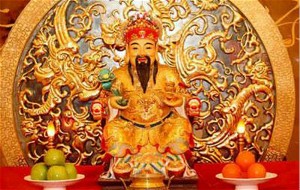
The fifth day is Ox's Day, also known as Po Wu – Break Five (''Po'' means breaking while ''Wu'' means five). It marks the ending of Spring Festival and everything would restore to the state before the New Year's Eve. Another saying goes that ''Wu'' means ''me'' (fifth is homophonic to me) and Po Wu means getting rid of bad habits, reflecting on the faults and creating a new self. The main customs include driving away the Ghost of Poverty, ushering in the God of Wealth, eating dumplings, and opening the market. There are many ways to drive away the Ghost of Poverty. The simple practice is to dump the garbage out the door. A folklore goes that the God of Wealth is the God of Five Directions, namely east, west, south, north and center and it means wealth can be obtained from five directions. Therefore, people would open their doors and windows, burn incense and set off firecrackers and fireworks to usher in the God of Wealth who can bring them money and treasure and bless them a rich year. Traditionally, businesses officially reopen on the next day.
Sixth Day of Lunar New Year
Lunar Date: January 6th
Gregorian Date: Feb.22, 2026
Traditions and Customs:
The sixth day is Horse's Day, on which people drive away the Ghost of Poverty by throwing out the garbage stored up during the festival. The ways vary but basically have the same meaning - to drive away the Ghost of Poverty, which reflects the general desire of the Chinese people to ring out the old and ring in the new, to send away the previous poverty and hardship and to usher in the good life of the New Year. Usually, people get to work or do business on this day. In old days, farmers would go to the field and prepare for the spring ploughing.
Seventh Day of Lunar New Year
Lunar Date: January 7th
Gregorian Date: Feb.23, 2026
Traditions and Customs:
The seventh day is Man's Day - human's birthday. According to the legend, Nu Wa created human on the seventh day after she finished animals like rooster, dog, ox and horse, thus the birthday of human beings. If it is sunny this day, people will be safe and have everything go well in the year. On Man's Day, people shall respect each other. It reflects the wishes of the working people in ancient China praying for blessing and peace and their respect to people themselves. Nowadays, on this day, most of the people working in companies begin to work after seven days holiday.
Fifteenth Day of Lunar New Year - Lantern Festival
Lunar Date: January 15th
Gregorian Date: Mar.3, 2026
Traditions and Customs:
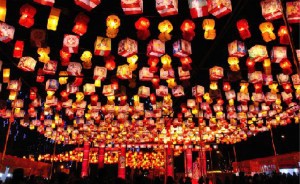
The traditional Chinese Lantern Festival falls upon the fifteenth day of the first lunar month and the festival activities reach to the climax on this day. At the night of Lantern Festival, the streets and alleyways are decorated and people light up festive lanterns and go out with friends and relatives to admire the lanterns, stroll around the flower markets, set off fireworks, sing and dance joyously to celebrate the festival. Traditional customs include admiring the full moon, setting off fireworks, guessing lantern riddles, eating Tang Yuan (rice glue ball), etc. Lion dance, dragon dance, stilt walk, land boat dance, yangko dance, and drum dance are also folkloric shows popular in many places.
Chinese Calendar
Su
Mo
Tu
We
Th
Fr
Sa
28十四/14
29十五/15
30十六/16
1十七/17
2十八/18
3十九/19
4二十/20
5廿壹/21
6廿二/22
7廿三/23
8廿四/24
9廿五/25
10廿六/26
11廿七/27
12廿八/28
13廿九/29
六月 (Jun)
14初壹/1
15初二/2
16初三/3
17初四/4
18初五/5
19初六/6
20初七/7
21初八/8
22初九/9
23初十/10
24十壹/11
25十二/12
26十三/13
27十四/14
28十五/15
29十六/16
30十七/17
31十八/18
1十九/19
{{week}}. {{month}} {{day}}, {{year}}
Lunar Date
{{lmonth}} {{lday}}, {{syear}} ({{zodiac}}) Year ({{lyear}}) {{sday}} Day, {{smonth}} Month
The Chinese Calendar has a year, months, days and hours. I'm wondering what time zone is the day, especially the time (the hours). I'm based in the US and has eastern (EST) or New York time zone.
My fiancée and I could not book both a church and a reception for November 2025 next year because everything is fully booked on the days that is auspicious. Is there a way to counter the bad luck on getting married on an inauspicious day. Chinese Calendar says that November 22, 2025 is inauspicious and that the only day that we could have both the church and the reception booked at the same time.
Hi there, can someone assist to give me some pointers on how to read the Chinese Calendar in terms of the "Zodiac", "Good or Bad" and "clash"? I am born in the year of Rooster so may I know which column I should look at to determine which hour of the day is auspicious? Thank you very much.
Hello, I am born in February 1971/Year of Pig. I would like to know if there is a calendar or service to determine auspicious days for each month by the animal sign? I thought it was referred to as a nobleman Day? Thank you